Angling
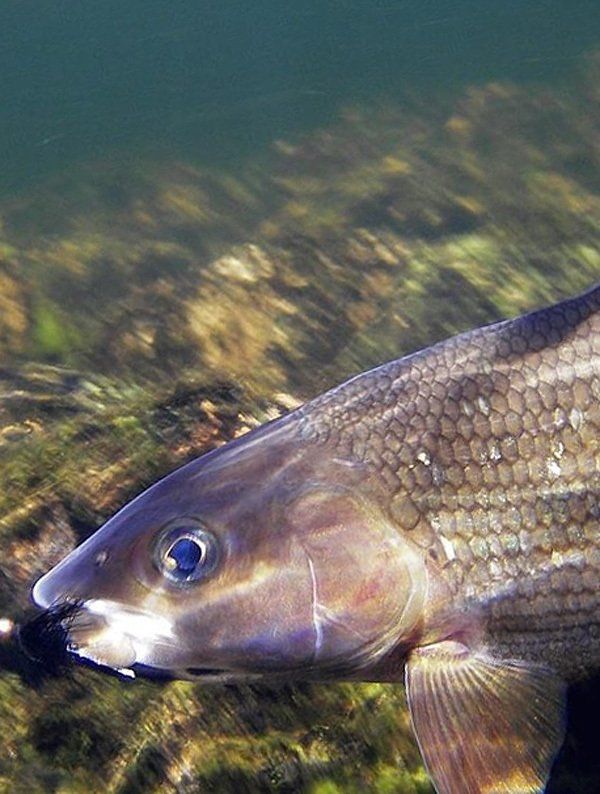
The Lady of the Stream
Grayling are among the most beautiful and most respected freshwater fishes in the northern hemisphere.
Their beauty; their habit of testing almost anything - including the angler - on the surface of the water; their shoaling instinct; the tendency to 'corkscrew' when hooked and fight seemingly forever make them a truly attractive and sporting fish.
Feeding
Grayling differ from trout in their feeding behaviour and reactions to fly patterns. Their habitat is generally similar to trout, as is their diet. However, whereas trout operate at most levels in the river system, the grayling tends to favour nymphs, caddis larvae and shrimps before surface feeding.
As one of nature's sublime contradictions, however, you can bet your boots that on a day when there is not a trout rise in sight the grayling will be pushing their nebs up to take surface fly like there was no tomorrow.
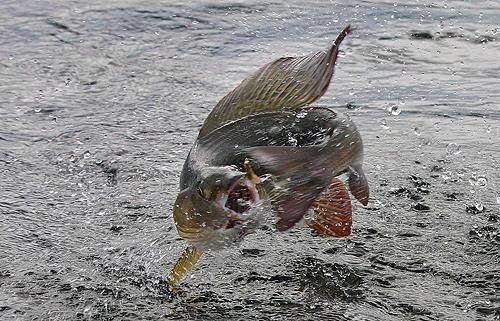
Grayling often glide up from considerable depths to intercept a floating fly. Because they come from so deep and their mouth is much lower down the jaw than that of a trout, a surface fly is taken by the grayling in a near vertical position, quite unlike the trout which generally just raises its position in the stream without changing its orientation.
A True Game Fish
Grayling have a tendency to shoal, so although they're not always easy to locate, once you've found one, you've found several, at least for a while. They are generally a more popular angler's fish in the autumn and winter.
A grayling hooked in, say, November is usually a stronger opponent than one caught in July. However, do not be mislead into thinking grayling are only worth fishing for after the trout season.
A summer grayling is still an excellent hard fighting and challenging fish and, whenever you catch one you can be sure it will fight in a more dogged manner than a trout and use the currents and downstream pressure of the water to resist you.
Grayling Angling Code
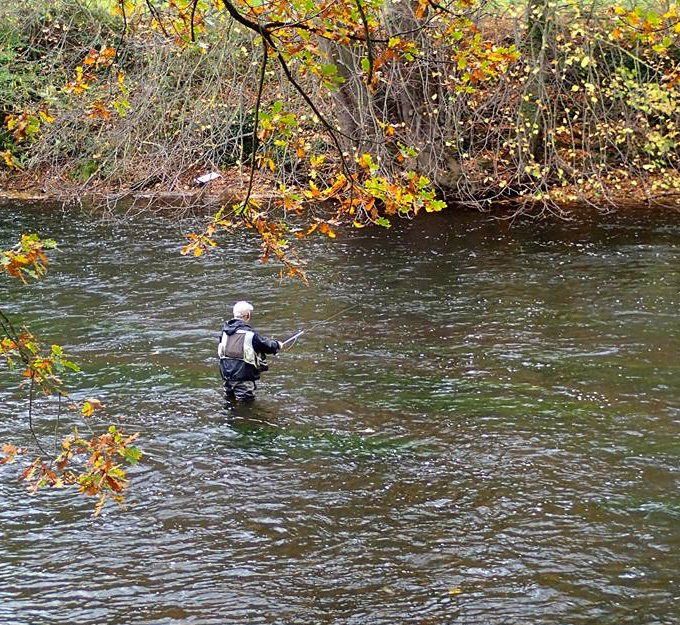
See the Grayling Angling Code for guidance on how to fish for grayling responsibly.
Go forth and angle
So, if you are looking for the most sporting and beautiful game fish in the country then look no further than the Lady of the Stream! Many waters offer day ticket fishing especially after the trout/salmon seasons have ended.
There are even places in the South where you can fish the top chalkstreams for a fraction of the cost you would pay during the trout season. And in the Midlands, Wales, North of England and Scotland there are many reasonably priced day ticket waters.
Joining the Society is a good way to gain access to day ticket waters. Members have access to the Grayling Angler's Guide with over 120 waters listed.